
The Smarter SIBO Test
Clinician-guided SIBO breath testing you can complete at home.

The Problem
Could SIBO Be Behind Your Gut Issues?
Small Intestinal Bacterial Overgrowth (SIBO) occurs when too many bacteria build up in the small intestine. This imbalance can cause gas, bloating, abdominal pain, diarrhea, and constipation.
Up to half of people with symptoms similar to irritable bowel syndrome (IBS) may actually have SIBO. Testing and identifying SIBO is important because it can be successfully treated in up to 85% of people.
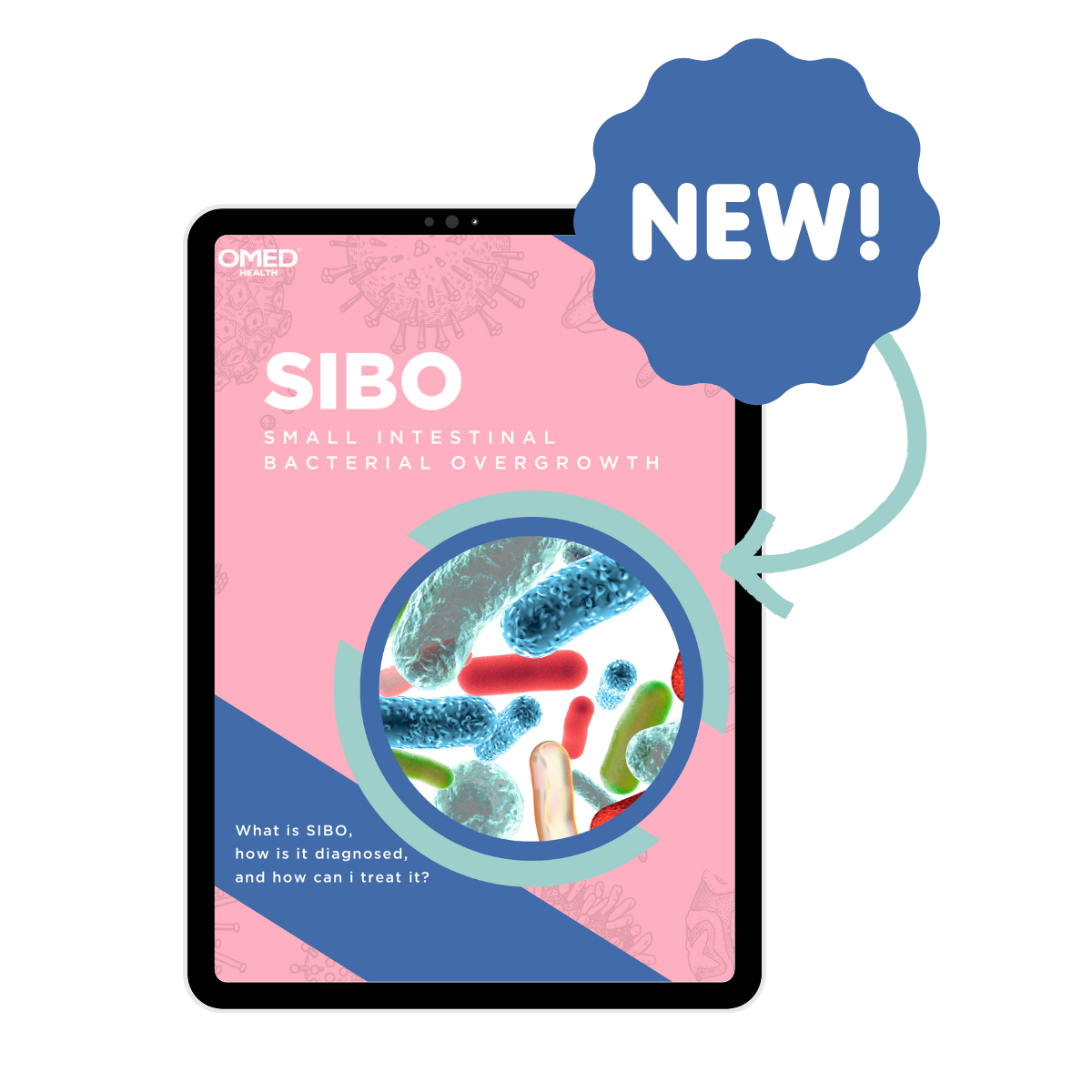
What is SIBO? Visit our Insights Hub to learn more.
How Does SIBO Breath Testing Work?
From symptoms to solutions in four easy steps
Take your SIBO breath test at home, receive expert clinical review, and move towards effective treatment.
Receive your SIBO test

Perform your at-home breath test

Doctor review and diagnosis

Retest and track progress
Insights
Simple Repeat Testing
SIBO can return over time, even after successful treatment.
With standard single-use kits, retesting often means starting again with a a new testing kit.
With OMED Health, your healthcare provider can request repeat SIBO tests using the same reusable device, helping you track progress, monitor treatment, and check for recurrence, with doctor-led diagnosis each time.

Targeted Gut Treatments
From Precision Data and Targeted Relief
An accurate breath test is just the beginning. True relief from gut symptoms comes from a targeted, data-driven treatment strategy. The SIBO breath test can clearly answer whether your gas profile is hydrogen-dominant, or methane-dominant which could indicate Intestinal Methanogen Overgrowth, or IMO.
SIBO and IMO involve different microorganisms, and treating them effectively requires a specific, personalized approach.
Depending on your diagnosis and unique gas profile, your healthcare professional can guide you through your targeted, personalized plan for treatment of SIBO or IMO. The goal of treatment is to restore balance in the gut and address factors that may contribute to bacterial overgrowth.
Addressing SIBO (Hydrogen-Dominant)
Elevated hydrogen levels typically correlate with bacterial overgrowth in the small intestine, which often manifests as bloating and diarrhoea.
- Antibiotics such as rifaximin, metronidazole, or ciprofloxacin may be prescribed to reduce the bacterial population in the small intestine to resolve symptoms.
- In some cases, your healthcare professional may recommend alternative approaches, such as a short, structured course of specialized, botanical antimicrobials (such as oregano, ginger, and targeted digestive enzymes) designed to rebalance small intestinal bacteria, dietary interventions, or probiotics.
Addressing IMO (Methane-Dominant)
Elevated methane levels are caused by an overgrowth of archaea (methanogens). This type of overgrowth alters motility and is frequently linked to chronic constipation.
- A combination of rifaximin and neomycin or metronidazole antibiotics may be prescribed to reduce the overgrowth.
- In some cases, your healthcare professional may recommend alternative approaches, such as a targeted blend of botanical ingredients (including peppermint, clove, and activated charcoal) to support motility and clear the overgrowth, the statin lovastatin, a low FODMAP diet, or probiotics.
Long-Term Gut Support & Recovery
Clearing the overgrowth is only phase one. To prevent recurrence and repair the gut lining, a long-term strategy is required. Your healthcare provider may recommend supplements to provide mucosal support and microbiome balance, utilizing restorative ingredients like L-glutamine, aloe vera, and probiotics.
Your Next Steps to Recovery
Your healthcare provider can request repeated SIBO tests using the same OMED Health Breath Analyzer, to help monitor treatment and follow-up, with a doctor-led diagnosis in the app each time. In this way, your healthcare provider has the precise data needed to safely recommend, customize, and track the exact treatment protocol your body requires.
For Healthcare Professionals
Clinical-Grade SIBO Breath Testing for Your Patients
Partner with OMED Health to offer your patients clinical-grade SIBO breath testing through a seamless at-home experience, with results you can trust. Join our growing network of independent practitioners, dietitians, nutritionists, and GI specialists who use OMED Health’s SIBO Test to remove the guesswork from gut health management.
REAL STORIES
Want to hear from others who have already achieved better digestive health with us?


Easy way to solve gut symptoms
Kasia

Barbara
Barbara

Jayne
Jayne

Alan
Alan

Marjorie
Marjorie
FAQS
Find answers to your common questions about OMED Health at-home SIBO tests.
Why isn’t one SIBO test always enough?
Digestive conditions can change. Many people repeat the SIBO breath test at home after completing treatment to check if SIBO has cleared; during diet or lifestyle changes to monitor progress; or if symptoms return months or years later. Traditional kits are single-use but the OMED Breath Analyzer is reusable, so you can test again without buying a whole new SIBO test kit.
How often can I use the Breath Analyzer?
The Breath Analyzer is reusable and you can provide breath samples as required. For example, to monitor the effects of certain foods or to track progress during treatment.
How accurate is the OMED Health SIBO test compared with postal kits?
The OMED Health Breath Analyzer has published performance data showing a mean absolute error of ~3.8 ppm for hydrogen and ~2.3 ppm for methane comparable with standard hospital breath testing. This accurate methane measurement is critical and is historically one of the most challenging gases to measure reliably at home. As you’re not mailing samples, there’s less risk of loss or degradation, and the App reduces user error. Read more here.
How long does the at-home SIBO test take?
The entire at home SIBO test process usually takes about 2–3 hours, with breath samples collected every 15–20 minutes after ingesting the test solution (substrate). Results are available quickly via the App.
What’s the difference between glucose and lactulose substrates for SIBO?
Our FAQ section might not have the answer you’re looking for right now but our team certainly will. If you need answers, contact us
INSIGHTS
Latest insights on gut health
Explore our expert articles on digestive wellness.
)
)
)

Take control of your health through simple at-home tests.