


If you’re starting a low FODMAP diet plan, you’re taking an important step towards better digestive health. A FODMAP diet is a scientifically backed approach designed to help with IBS and other digestive issues. However, it is not meant to be a long-term diet – it is a structured plan to help you pinpoint which foods trigger your symptoms.
We know that starting something new can feel overwhelming, but with the right guidance and a step-by-step approach, it does get easier. This blog will provide practical, easy-to-follow tips to help you make the most of this stage of your gut health journey, from meal planning to food shopping, and dining out.
Important disclaimer: A FODMAP diet should only be followed alongside a healthcare professional. It is a temporary approach and should always be done with medical support to ensure nutritional balance and proper food reintroduction.
Tip 1: Educate yourself on FODMAPs
Understanding what FODMAPs are – and how they affect your gut is a crucial step in making this diet work for you.
What are FODMAPs?
FODMAP stands for Fermentable Oligosaccharides, Disaccharides, Monosaccharides, and Polyols. These are short-chain carbohydrates found in various foods that can be difficult for some people to digest, leading to symptoms like bloating, gas, diarrhea, and stomach pain.
Here’s a quick breakdown of the different FODMAP groups:
FODMAP type |
Examples |
Why they can cause symptoms |
|
Oligosaccharides (fructans & galactooligosaccharides) |
Wheat, rye, onions, garlic, legumes | These can be poorly absorbed in the small intestine, leading to fermentation in the gut |
|
Disaccharides (lactose) |
Milk, soft cheeses, yogurt |
Many people lack adequate amounts of the enzyme lactase to properly break down lactose |
| Monosaccharides (excess fructose) | Apples, honey, high-fructose corn syrup |
Fructose absorption issues can lead to digestive discomfort |
| Polyols (sorbitol, mannitol, maltitol, xylitol, perseitol) | Stone fruits (cherries, peaches), sugar-free gum, avocado, cauliflower |
These sugar alcohols pull water into the gut and ferment, causing bloating and gas for some |
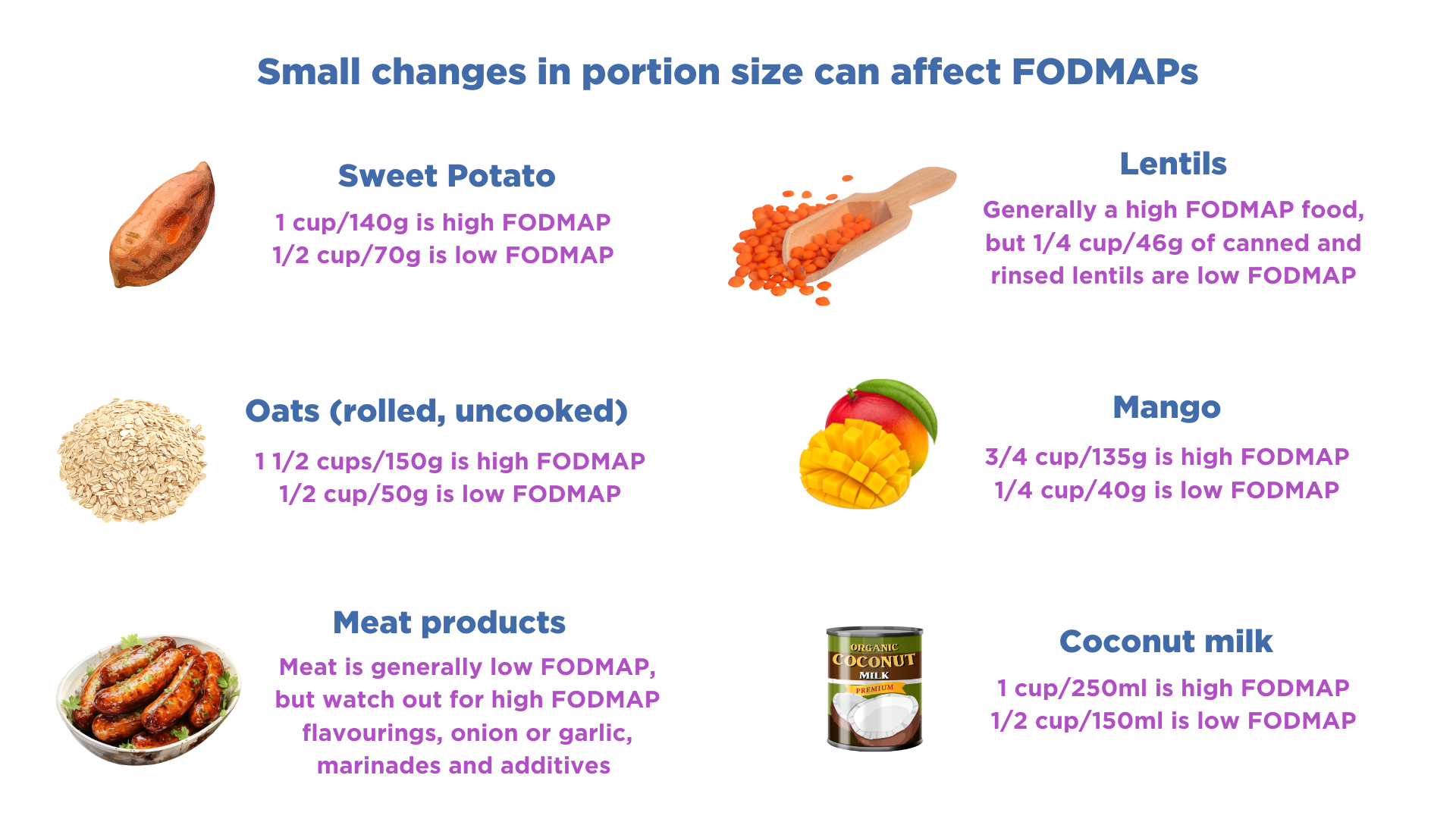
A low FODMAP diet is a three-stage process: restriction, reintroduction, and personalization. It’s not about avoiding all FODMAPs permanently, but temporarily cutting them out to identify triggers, then gradually reintroducing them to determine tolerance levels. Everyone’s tolerance differs—some can handle small amounts of high FODMAP foods, while others need to be more cautious. Keeping an eye on FODMAP portions within a meal plays a key role—as some foods that are high in FODMAPs are fine to eat in small quantities. On the other hand, a large portion of a low-medium FODMAP food could cause digestive issues.
Tip 2: Use a Simple Meal Plan to Start
Now that you have a better understanding of FODMAP foods, the next step is figuring out what to eat! Whilst on your plan, we are here to help you. To make things easier we’ve created a range of low FODMAP recipes for you to try, all carefully tested to ensure they’re both delicious and compliant with your plan. In fact, all our recipes have been verified by a Monash University certified dietician.
If you are unsure what to cook or feeling stuck, take a look at our recipe book on our website and download it to your phone for future reference! Whether it’s breakfast, lunch, dinner, or snacks, we have you covered. This will help take the guesswork out of your meal prep and give you the confidence to stay on track, as well as avoid unnecessary stress which could worsen your gut symptoms.
Tip 3: Check food labels carefully
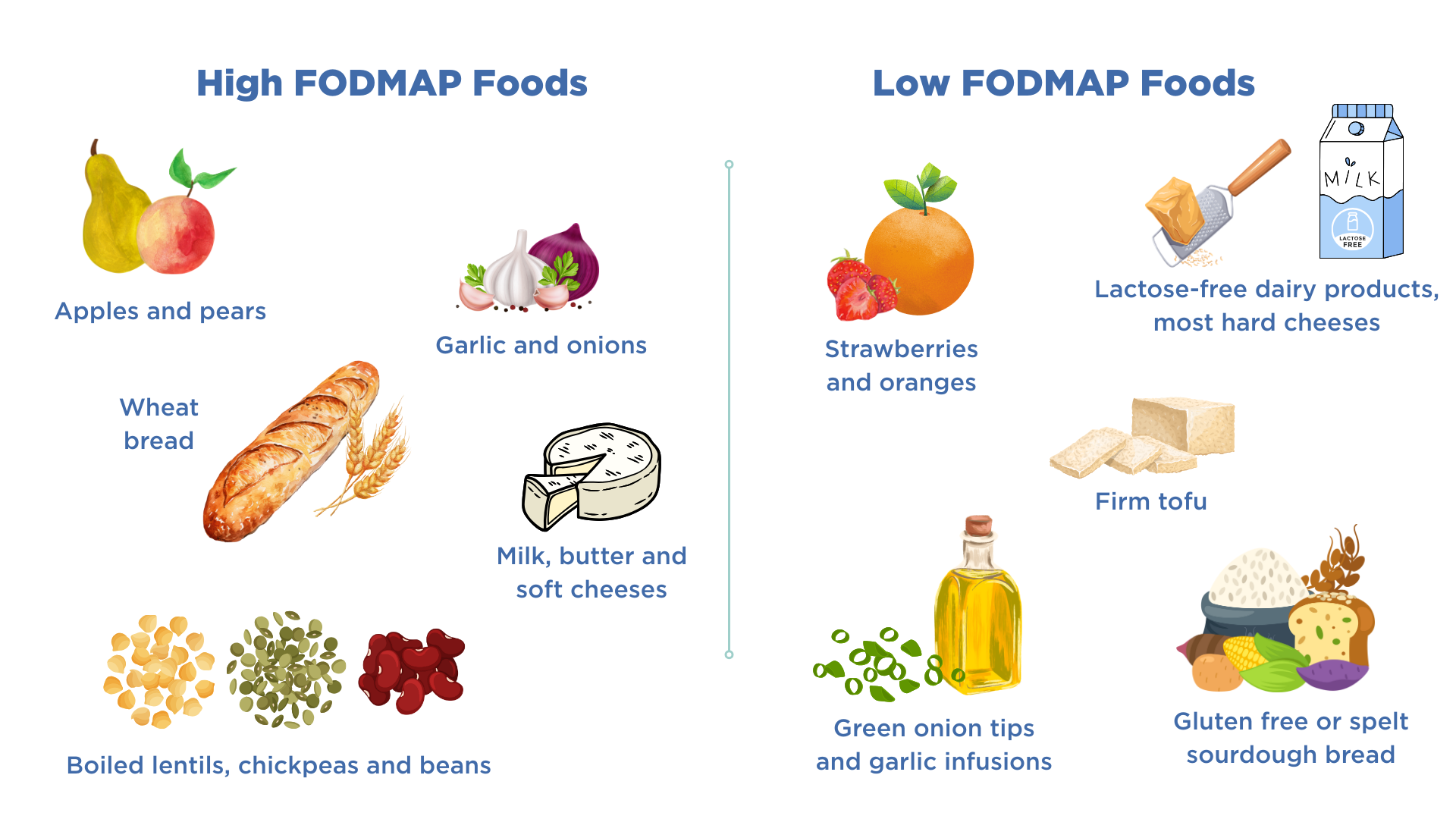
When following A FODMAP diet, reading the food labels is an important step in making sure you are sticking to your plan. Even foods that seem ‘safe’ may contain hidden high FODMAP ingredients. Look out for ingredients like onion powder, garlic powder, high fructose corn syrup, and wheat. These are high FODMAP ingredients found in a range of items including sauces, salad dressings, canned soup, and processed meats.
It is not just food that you need to be cautious of, check your drinks too – many beverages contain fructose or sugar alcohols like sorbitol, xylitol, or erythritol. Some artificially sweetened drinks should be avoided, as they contain sugar alcohols that are high FODMAP, these are the ‘P’ in FODMAP.
By becoming familiar with what to look for on the ingredient labels, you can make more informed choices.
Tip 4: Stock your cupboards with low FODMAP staples
One of the best ways to stay on track with your low FODMAP diet is to make sure that you stock your kitchen with low FODMAP alternatives for your new staples over this period.
Key essentials to have in the cupboards include:
- Gluten-free pastas: a great alternative to traditional wheat pasta, though do check what it’s made of. Pastas made of legumes like lentils or beans are higher FODMAP whilst pastas made with potato starch, rice flour (including brown rice), corn flour or buckwheat flour are generally low FODMAP.
- Lactose-free dairy products: Perfect for making sure you are still getting calcium and protein. Not all dairy free alternatives are low FODMAP so it’s worth doing your research then sticking to the same product you know and like.
In addition to these, several easy swaps can help you prepare meals without losing out on a punch of flavor:
- Garlic-infused oil: instead of fresh garlic which is high in FODMAPs
- Spring onions (the green part only): While normal brown and red onions are high in FODMAPs, we bet you did not know that the green part of spring onion (green onion) is low FODMAP! Therefore, you can still have the flavor but still stay on track with your plan.
- Maple syrup – instead of honey (which can be high in FODMAPs), use maple syrup to sweeten your meals.
Tip 5: Keep a detailed food and symptom journal
Navigating the low FODMAP diet successfully requires understanding how specific foods affect your body. Maintaining a daily journal during the restriction and reintroduction phases is an excellent way to track this data accurately.
- What to track: Record everything you eat and drink, portion sizes, the timing of your meals, and any digestive symptoms that occur (along with their severity).
- Look beyond food: Note other factors that influence gut health, such as stress levels, sleep quality, and physical activity.
- Track the reintroduction: When it comes time to reintroduce specific challenge foods, a written history makes it much easier to pinpoint exact trigger thresholds and work systematically with your practitioner to build a long-term, personalized plan.
Tip 6: Stay mindful when eating out
You can still enjoy meals out with friends and family on a low FODMAP diet, you just need to take a more mindful approach in doing so! Start by researching the menu ahead of time to find suitable options. Don’t be afraid to ask for modifications—like taking out garlic and onions or ordering gluten-free pasta or pizza options. Many restaurants are used to accommodating dietary requests, so express your needs confidently.
It’s also a good idea to have a go-to “safe” meal, like a grilled chicken salad or plain steak, for when you’re unsure what to order. If you know you’re lactose intolerant, taking lactase enzymes beforehand or opting for dairy-free dishes could be your best bet. Dining out doesn’t have to be stressful; with a little preparation, you can enjoy eating out while sticking to your low FODMAP diet plan!
In conclusion, starting a low FODMAP diet doesn’t have to be overwhelming. With the right planning, support, and resources, you can transition to your new diet smoothly and confidently. Remember, you’re not alone – if you need support, you can find an OMED approved practitioner who can help guide you to better digestive health.
Could SIBO Be Behind Your Gut Issue?
Up to 50% of people with IBS symptoms have SIBO, which can be treated.