


Our digestive systems are very adept at breaking down the foods we eat to extract energy and vital nutrients, but sometimes these processes don’t work as they should, leading to uncomfortable gastrointestinal symptoms and associated effects on quality of life. In this blog, we’ll discuss one of the main components of human diets – carbohydrates – and what happens when their breakdown and absorption is impeded – a set of conditions called carbohydrate malabsorption.
Firstly, what are carbohydrates?
Carbohydrates provide a vital source of energy as one of the macronutrients in your diet, alongside protein and fat (1). Carbohydrates (or saccharides) are molecules made up of carbon, hydrogen, and oxygen, and can be divided into four structural groups: monosaccharides, disaccharides, oligosaccharides, and polysaccharides. It is also possible to classify carbohydrates by type, of which there are also four: simple and complex carbohydrates, starches, and fiber. These molecules are found in many different foods and are broken down either by your digestive enzymes or gut bacteria.
Normally, on the journey from your mouth to your small intestine, carbohydrates are broken down by enzymes to monosaccharides, which are then absorbed by your gut cells (2). Following absorption, carbohydrates primarily act as an energy source, and have secondary roles in blood glucose control and insulin, cholesterol, and triglyceride metabolism (1).

What are the causes and symptoms of carbohydrate malabsorption?
Some people do not produce the right enzymes to help break down carbohydrates (congenital malabsorption), have defective enzymes or absorption systems (primary malabsorption), or are unable to absorb carbohydrates normally due to impairments in gastrointestinal function, often as a result of digestive conditions like Celiac Disease and Crohn’s Disease (secondary malabsorption) (2).
Symptoms of carbohydrate malabsorption are primarily gastrointestinal and can include (2):
- Abdominal cramps and pain
- Diarrhea
- Bloating and gas
- Nausea
- Headaches
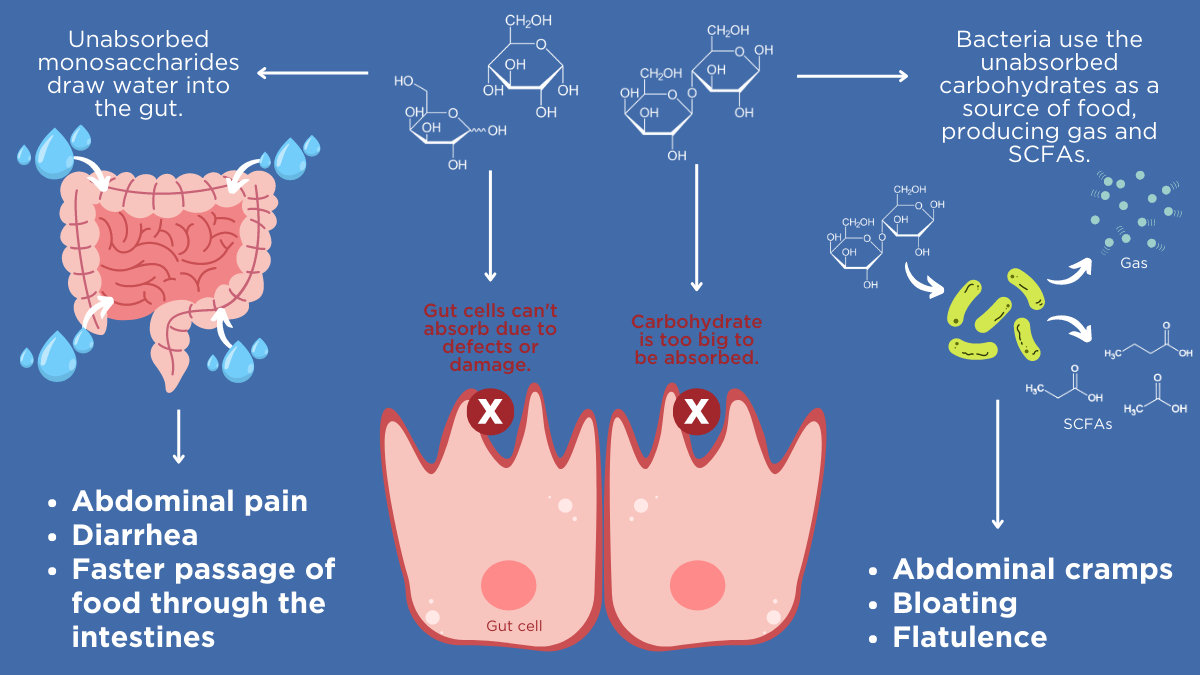
Gastrointestinal symptoms of carbohydrate malabsorption are thought to be driven by two factors. Firstly, a gut full of unabsorbed sugars attracts water – this is known scientifically as ‘increasing the osmotic load’ (2). Large amounts of water in your gut can lead to pain, diarrhea, and accelerated passage of food through your digestive system (2). Secondly, when carbohydrates are not broken down and absorbed properly, they can act as a fuel for your gut bacteria which readily feed on them, producing hydrogen, methane, and carbon dioxide gases in the process. This can leave you feeling bloated and suffering from abdominal pain and flatulence (3). Bacterial metabolism of carbohydrates also produces short-chain fatty acids (SCFAs) which although beneficial to your gut cells, can cause cramps and diarrhea at higher concentrations (3).
Diagnosis and treatment of carbohydrate malabsorption
Living with carbohydrate malabsorption symptoms can be incredibly uncomfortable and have knock-on effects on your quality of life. Seeking diagnosis and treatment for carbohydrate malabsorption is not always easy, as the gastrointestinal symptoms described above can overlap with other gut health conditions. It’s therefore likely that your doctor may want to rule out other more serious conditions first (e.g., colorectal cancer, inflammatory bowel disease) before testing for carbohydrate malabsorption.
Luckily, carbohydrate malabsorption is relatively easy to diagnose – all thanks to breath tests! The hydrogen gas that your gut bacteria produce as they break down carbohydrates enters your systemic circulation, travels to the lungs, and is exhaled on breath. By collecting breath samples after you’ve drunk a carbohydrate solution (e.g., lactose, fructose), we can see whether the hydrogen levels on breath rise over a set time frame, indicating that you have a carbohydrate malabsorption disorder.

Carbohydrate malabsorption is often managed through dietary modifications, such as avoiding the malabsorbed sugar (e.g., lactose, fructose) (2). Some carbohydrate malabsorption conditions can also be managed by taking enzyme supplements (4). For patients suffering from secondary carbohydrate malabsorption as a result of a gastrointestinal disease, treatment instead focuses on resolving the underlying condition (2).
Ultimately, management and treatment of carbohydrate malabsorption is unique to the type of malabsorption condition you have and your personal therapeutic preferences. Treatment pathways for carbohydrate malabsorption, particularly those involving dietary modification or restriction, should always be undertaken with the guidance of an appropriate medical professional.
How OMED Health Supports Your Journey
Malabsorption disorders are sometimes signs of the gut health condition SIBO (small intestinal bacterial overgrowth). Luckily, SIBO can be easily diagnosed with a simple at-home SIBO breath test. This test measures the hydrogen and methane levels in your breath, and you’ll receive a doctor-led diagnosis in the app. If you test positive for SIBO, the good news is that treatments are available. Your healthcare provider can recommend a personalized treatment plan based on your diagnosis. Ask your healthcare provider about a SIBO Test.
References
- Holesh JE, Aslam S, Martin A. Physiology, Carbohydrates. In: StatPearls. StatPearls Publishing; 2023. Accessed May 25, 2023. http://www.ncbi.nlm.nih.gov/books/NBK459280/
- Born P. Carbohydrate malabsorption in patients with non-specific abdominal complaints. World J Gastroenterol. 2007;13(43):5687-5691. doi:10.3748/wjg.v13.i43.5687
- Omer A, Quigley EMM. Carbohydrate Maldigestion and Malabsorption. Clinical Gastroenterology and Hepatology. 2018;16(8):1197-1199. doi:10.1016/j.cgh.2018.01.048
- Born P. The clinical impact of carbohydrate malabsorption. Arab Journal of Gastroenterology. 2011;12(1):1-4. doi:10.1016/j.ajg.2011.01.002