

Digestive discomfort, bloating, and changes to bowel movements such as constipation or diarrhea could be caused by Intestinal Methanogen Overgrowth (IMO). If you’ve ever undergone traditional breath testing to diagnose this condition, you know it can be quite a time-consuming process. Enter the Single Methane Measurement (SMM), or methane test, a potential game-changer for patients requiring gut health diagnosis and monitoring.
The Status Quo: Long Breath Tests and Their Challenges
IMO, a gastrointestinal condition associated with symptoms like bloating, gas, abdominal discomfort, and constipation, has typically been diagnosed through breath testing. However, the conventional method involves a two-hour window for testing, making it a challenging and time-consuming process, especially for patients requiring repeat tests as part of ongoing monitoring, post-diagnosis.
Simplifying the Diagnostic Process using Single Methane Measurement.
In a 2022 study, researchers explored the feasibility of using a methane test as a diagnostic and monitoring tool for IMO (1). Unlike small intestinal bacterial overgrowth (SIBO), IMO patients exhibit relatively stable methane levels on breath, potentially making methane a simple and effective biomarker for the disease.
Takakura and team leveraged extensive historical data, including over 12,000 lactulose breath tests and more than 700 glucose breath tests. The results were compelling — using a single methane measurement from standard two-hour tests showed a high correlation with IMO diagnosis. The sensitivity ranged between 86.4% and 98.8%, with a specificity of 99.3% to 100%, depending on the cut-off points.
To assess the stability of SMM in IMO patients, the researchers examined breath methane measurements taken on the day of a two-hour test and compared them with measurements taken 14 days later. The results indicated minimal changes, suggesting that SMM remains consistent over time. Further data from a placebo group in a treatment trial supported this, showing stable SMM levels for at least 84 days.
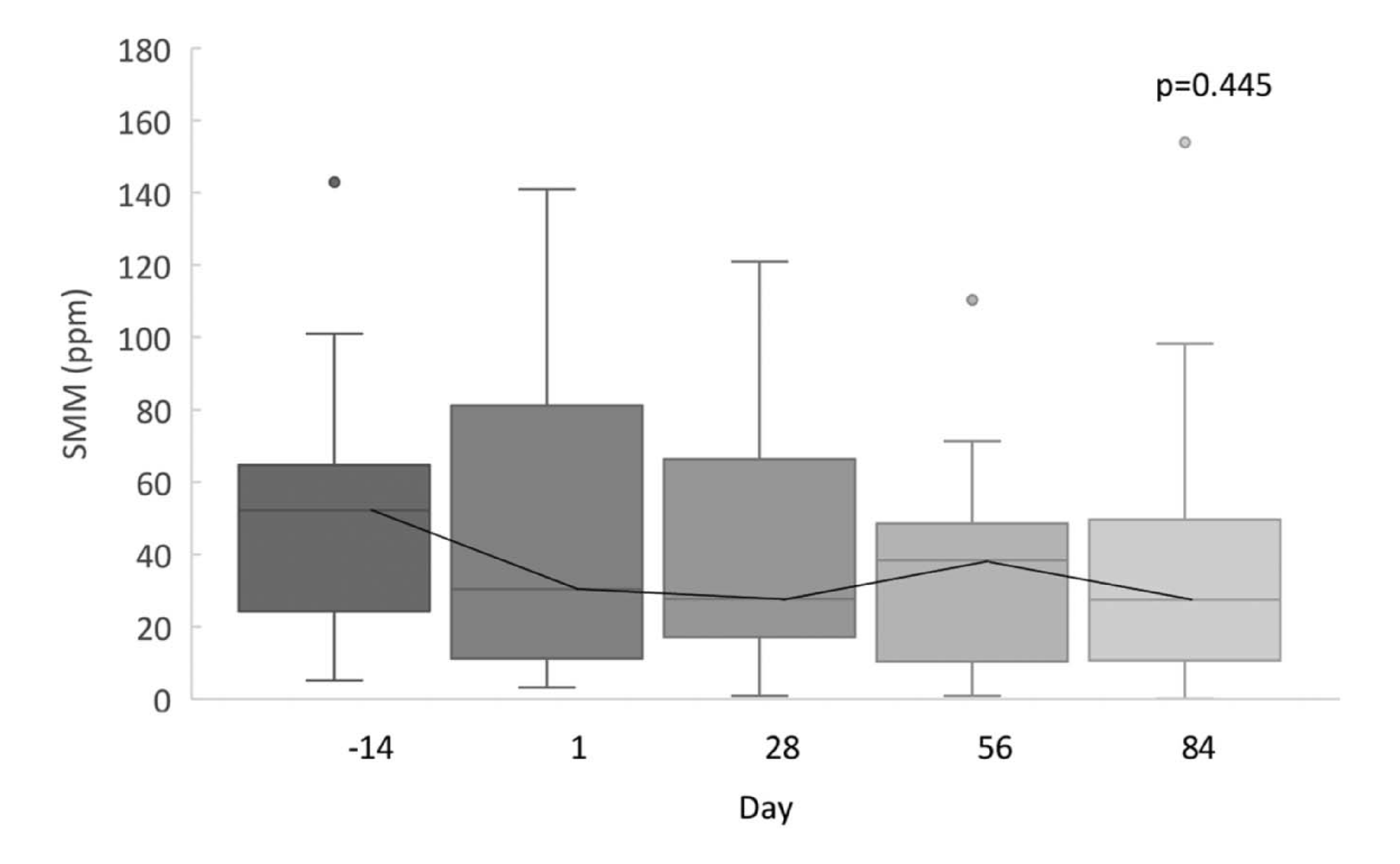
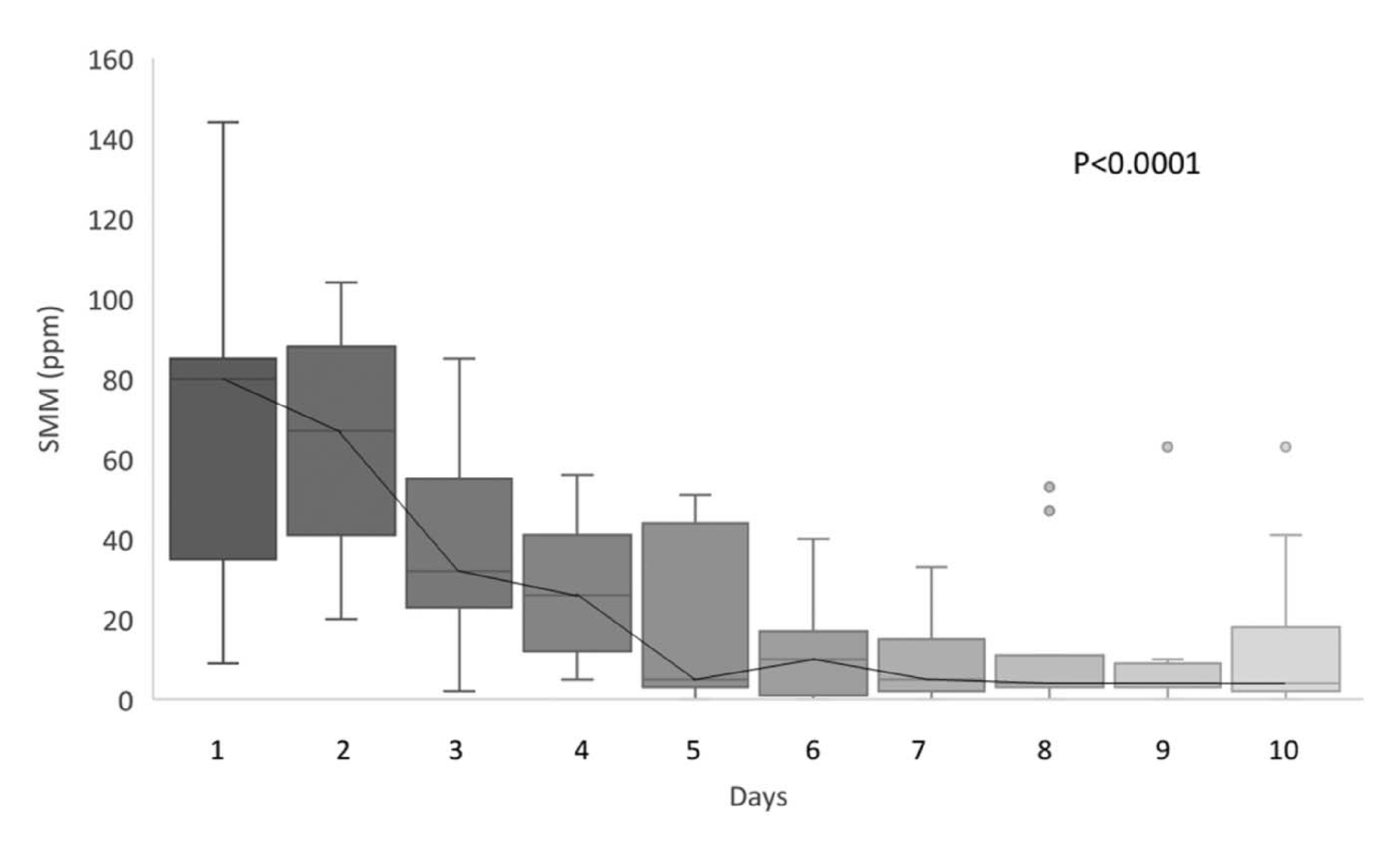
Figure 1: For subjects who received placebo, SMM did not change over time.
Fig 2: Daily SMM levels rapidly and significantly drop during antibiotic therapy.
The study also found a correlation between SMM levels and gastrointestinal symptoms. Patients with an SMM greater than 10 ppm were more likely to report constipation, while those with levels under 10 ppm were more prone to diarrhea. This aligns with previous knowledge that methane can slow intestinal motility.
The robustness of the results led Takakura et al. to conclude that SMM can accurately and non-invasively diagnose IMO, offering a simpler alternative to the standard two-hour breath tests. If further trials confirm these findings, it could potentially reduce costs and increase convenience for patients.
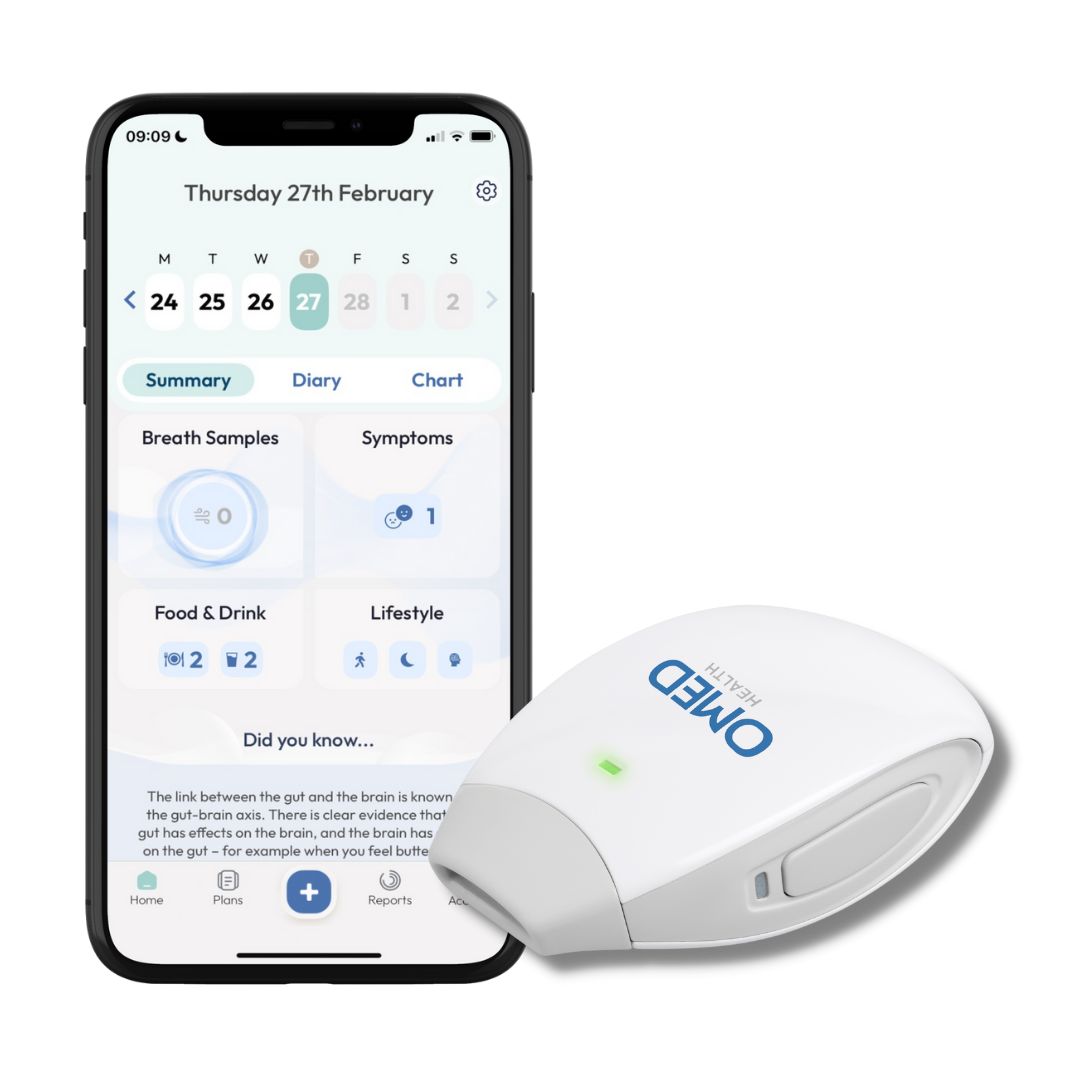
Drawing on years of expertise in breath research, OMED Health has built upon this science. Our medical-grade, sensor-based Breath Analyzer precisely measures both hydrogen and methane down to parts per million, serving as a vital clinical aid for independent healthcare professionals to identify overgrowths characterized by breath methane levels greater than 10 ppm.
The at-home OMED Health SIBO breath test can help identify SIBO and IMO, with a doctor-led diagnosis delivered in the app. If you test positive, your healthcare provider can recommend a personalized treatment plan based on your diagnosis. Ask your healthcare provider about the at-home SIBO Test.
References:
- Takakura et al. A Single Fasting Exhaled Methane Level Correlates With Fecal Methanogen Load, Clinical Symptoms and Accurately Detects Intestinal Methanogen Overgrowth Am J Gastroenterol 2022; 00:1–8. DOI: 10.14309/ajg.0000000000001607