


What is IMO?
Intestinal methanogen overgrowth or IMO occurs when there are too many methane producing microorganisms present in the gut. These microorganisms are single-celled microbes called archaea. Whilst archaea naturally occur in the intestines, their colonies can sometimes overgrow, producing much more methane than normal. Hence the condition is called “intestinal methanogen overgrowth”.

IMO can sometimes be misdiagnosed as small intestinal bacterial overgrowth (SIBO) and was once known as a sub-type of SIBO (1). However, SIBO is caused by bacteria, not archaea, and it only occurs in the small intestine, whereas methanogens can be present throughout the entire gut. SIBO is also more commonly associated with diarrhea, where IMO patients usually present with constipation (2).
What are the symptoms of IMO?
IMO causes non-specific gut symptoms such as bloating and abdominal pain. It’s generally associated with slow gut transit and constipation rather than loose stools (3). If no breath tests are performed, it can be misdiagnosed as constipation predominant irritable bowel syndrome (IBS-C) (4). IBS is a complex disorder of the gut-brain axis that you can read about in detail in our eBook.
How is IMO diagnosed?
If you are experiencing digestive issues like bloating, constipation or abdominal discomfort, you might be wondering: how is IMO diagnosed, and could it be the root cause of your symptoms?
Although methane is found in 30-50% of adults, people with higher levels of methane production have also been observed to suffer from gastrointestinal symptoms more frequently (5).
The most reliable way to diagnose IMO is through a methane breath test, alongside a healthcare professional (6). This non-invasive test measures the concentration of methane in your breath, which directly reflects the activity of methane producing microbes in your gut.
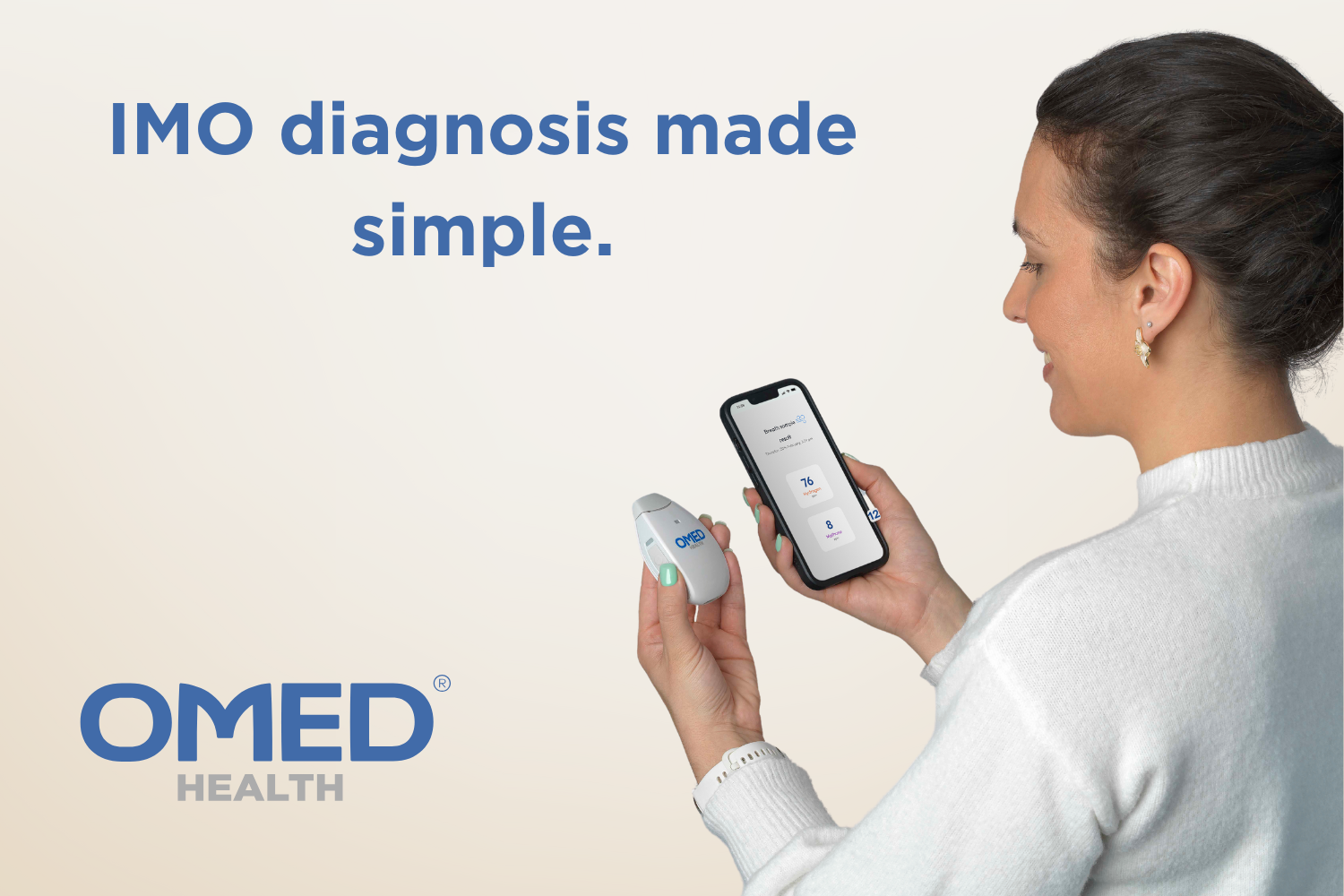
Traditionally, this is performed in a doctor’s office. Now, a simple at-home SIBO breath test, available through your healthcare provider, can help determine whether you have IMO or SIBO. The test measures the hydrogen and methane levels in your breath, and a doctor-led diagnosis is delivered in the app.
The OMED Health SIBO Breath Test: Direct, Streamlined Clarity
When your healthcare professional refers you to the OMED Health platform, you go straight into your targeted testing protocol to capture immediate, actionable data curves—eliminating the guesswork of generic lifestyle plans or lengthy baseline phases.
What does the testing process involve?
- Precision Breath Testing: Simple, sequential breath samples taken at home to track exactly how your gut microbes react over a specific testing window.
- The OMED Health App: Seamless digital integration to guide you through the test steps, allowing you to log symptoms and food intake to connect your daily habits directly to your breath data.
- Immediate Portal Sync: Your data is instantly mapped into comprehensive hydrogen and methane curves and securely sent straight to your practitioner’s dashboard.
The moment your test is complete, your healthcare professional can log into their specialist portal, interpret your results, and immediately design your targeted treatment plan.
How can you treat IMO?
High levels of methane in the breath indicate abnormal amounts of methane producing archaea in the gut, suggesting that there is a dysbiosis. This imbalance of the gut microbiome can be treated with antimicrobials, or if needed, antibiotics (7). These treatments aim to reduce levels of archaea in the gut so that less symptom causing methane is produced. Some doctors may also advise a special diet to ease symptoms and figure out if certain foods should be avoided or eaten more regularly to support long term gut health (7). Read more about treatment options in our blog.
Have you already tested for IMO? Find out your next steps if you have either a positive or negative diagnosis in our other blogs:
How can OMED Health help?
If you’re suffering from gut health issues, it may be worth investigating whether SIBO or IMO could be behind your symptoms. OMED Health have developed a simple at-home SIBO breath test that measures the hydrogen and methane levels in your breath and provides a doctor-led diagnosis in the app. If you test positive for SIBO or IMO, your healthcare provider can recommend a personalized treatment plan based on your diagnosis.
Ask your healthcare provider about the at-home SIBO Breath Test.
Ready to stop guessing and bring clinical-grade data to your digestive care? Use our directory to find an approved independent specialist and begin your testing journey today.

References
- Suri J, Kataria R, Malik Z, Parkman HP, Schey R. Elevated methane levels in small intestinal bacterial overgrowth suggests delayed small bowel and colonic transit. Medicine. 2018 May;97(21):e10554. doi: 10.1097/MD.0000000000010554
- Methanogens in Human Health and Disease – ProQuest [Internet]. [cited 2025 Mar 18]. Available from: https://www.proquest.com/openview/6e81fbd35456ac77185043bf1d356321/1?cbl=2041980&pq-origsite=gscholar
- Mehravar S, Takakura W, Wang J, Pimentel M, Nasser J, Rezaie A. Symptom Profile of Patients With Intestinal Methanogen Overgrowth: A Systematic Review and Meta-analysis. Clinical Gastroenterology and Hepatology [Internet]. 2024 Aug 13 [cited 2025 Mar 18];0(0). Available from: https://www.cghjournal.org/article/S1542-3565(24)00716-X/abstractdoi: 10.1016/j.cgh.2024.07.020
- Takakura W, Pimentel M. Small Intestinal Bacterial Overgrowth and Irritable Bowel Syndrome – An Update. Front Psychiatry [Internet]. 2020 Jul 10 [cited 2025 Mar 18];11. Available from: https://www.frontiersin.org/journals/psychiatry/articles/10.3389/fpsyt.2020.00664/full
- Triantafyllou K, Chang C, Pimentel M. Methanogens, Methane and Gastrointestinal Motility. J Neurogastroenterol Motil. 2014 Jan 31;20(1):31–40. doi: 10.5056/jnm.2014.20.1.31
- Rezaie A, Buresi M, Lembo A, Lin H, McCallum R, Rao S, et al. Hydrogen and Methane-Based Breath Testing in Gastrointestinal Disorders: The North American Consensus. Official journal of the American College of Gastroenterology | ACG. 2017 May;112(5):775. doi: 10.1038/ajg.2017.46
- Rej A, Potter MDE, Talley NJ, Shah A, Holtmann G, Sanders DS. Evidence-Based and Emerging Diet Recommendations for Small Bowel Disorders. Official journal of the American College of Gastroenterology | ACG. 2022 Jun;117(6):958. doi: 10.14309/ajg.0000000000001764