

We have all been there, curled up around the toilet having been sick for hours and not able to physically move to get that glass of water you so desperately need. No, we are not talking about hangovers! In this blog we will discuss food poisoning and how this can affect our gut health as well as what you can do to restore your microbiome after an upset episode.
What is food poisoning?
Food poisoning (gastroenteritis) is a foodborne illness that causes you to be sick after eating or drinking something infected with bacteria, toxins, parasites, viruses and other chemicals. This is usually due to the way the item has been stored, prepared or cooked.
The symptoms of food poisoning are:
- Nausea
- Being physically sick
- Abdominal pain
- Diarrhea
- A high body temperature
Symptoms usually begin within a few hours but can take up to several days to materialize. In most cases, you should feel better after seven days but you may experience trouble with your gut for a longer period.
What happens to your gut when you get food poisoning
The long-term effects of food poisoning depend on the severity, type of infection, and your overall health. Let’s break down how it can affect the gut:
- Disruption of the gut microbiome (dysbiosis)
Food poisoning causes significant disruption to the gut microbiome, which is also known as dysbiosis. The foodborne pathogens (like Salmonella, E. coli, Campylobacter) disrupt beneficial gut bacteria and allow opportunistic pathogens to flourish. The balance between the “good” and “bad” microbes’ shifts, which can result long-term issues such as post-infectious irritable bowel syndrome (PI-IBS). Symptoms of PI-IBS include pain, persistent bloating, irregular bowel movements, or increased susceptibility to future infections.
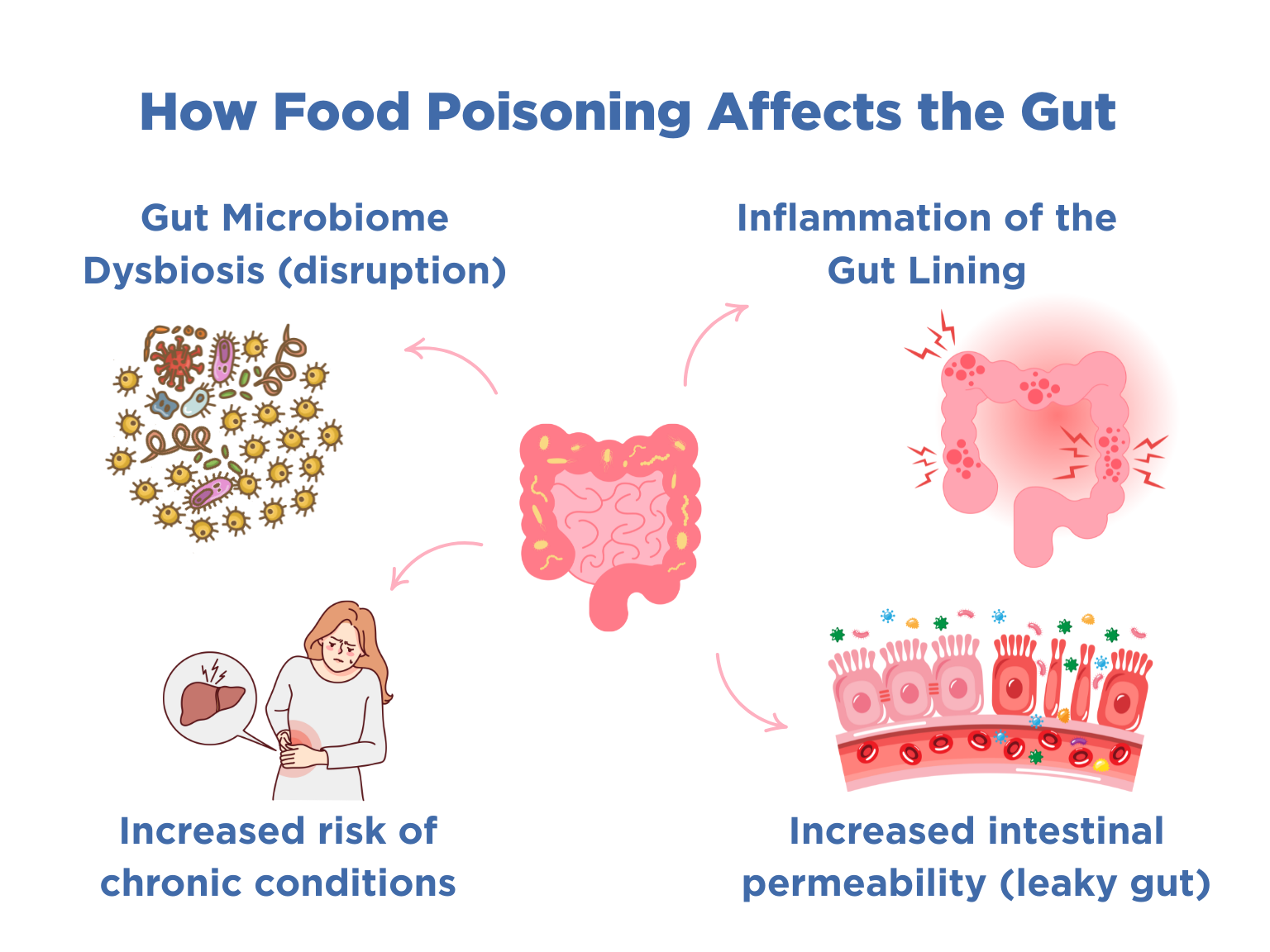
- Inflammation of the gut lining
An infection within the body will trigger an immune response. The intestinal lining can become inflamed or damaged when microbes or their toxins damage the intestinal cells, triggering the immune system to release cytokines, signalling proteins that help to control inflammation in your body. These proteins promote a strong inflammatory response, which can disrupt the gut’s ability to absorb nutrients and water, causing symptoms like diarrhea and abdominal pain. This may temporarily impair nutrient absorption and digestion.
- Increased intestinal permeability (“leaky gut”)
Increased intestinal permeability, or “leaky gut,” occurs when the protective barrier of the intestinal lining becomes damaged, allowing larger molecules, such as toxins, bacteria, and partially digested food particles, to pass into the bloodstream and trigger an immune response in some individuals.
You can learn more about leaky gut in our blog, ‘A Leaky Gut: What it Does, and Doesn’t Mean.’
- Increased risk of chronic conditions
If you experience recurring bouts of food poisoning, these can contribute to malnutrition and long-term digestive issues.
On rare occasions, there can be long-term effects of food poisoning due to your immune response to the bacterial infection, autoimmune response, or direct damage to organs and nerves caused by toxins or pathogens. Alongside IBS, it can also be linked to other chronic conditions such as arthritis, kidney problems, and nervous system damage, depending on the specific pathogen involved. Common bacteria like Salmonella and Campylobacter can also be linked to reactive arthritis.
What to do post-food poisoning to help your gut
The recommended treatment for food poisoning is rest, hydration, eating bland or plain foods and taking pain medications if you need to. It is not advised to have alcohol, fizzy drinks, fruit juices, spicy foods, caffeine or high fibre foods whilst experiencing symptoms as they may make them worse. Once you are feeling better, do consider rehydration tablets or drinks.
To help restore your gut post food poisoning, a three-step process is recommended:
- Repopulate the good bacteria in the gut microbiome
Research is ongoing as to whether taking probiotics in cases of food poisoning affects the durations and severity of symptoms (1). Taking probiotics, such as the Lactobacillus and Bifidobacterium strains, post a bout of food poisoning can offer health benefits such as supporting your immune system, restoring the balance of the gut microbiome and helping to reduce the pathogen colonization (2). Eating probiotic rich foods, such as yogurt, kefir, sauerkraut, kimchi, miso, and tempeh can also provide live beneficial bacteria.
Alongside probiotics, consuming food rich in prebiotics such as found in garlic, onions, leeks, asparagus, bananas, oats can also help to aid microbial balance.
- Aid the repair of the gut lining
Many suggest supplements such as glycine, glutamine and collagen can help aid the repair of the gut lining. There is a lack of scientific studies into the effect of these on the repair of the gut. More research is therefore needed before any nutritional supplements, including glutamine, can be recommended in clinical practice for gut repair (3).
- Help regulate inflammation and stress
Try to reduce stress with techniques such as mindfulness, yoga, deep breathing, and good sleep to help restore balance along the gut-brain axis. An anti-inflammatory diet with a focus on whole foods and limited processed foods should also help.
How OMED Health Can Help You
If you are struggling with IBS symptoms, it might not be just IBS. Up to 80% of those with symptoms such as abdominal pain, constipation, bloating and diarrhea have conditions such as small intestinal bacterial overgrowth (SIBO) which can be treated.
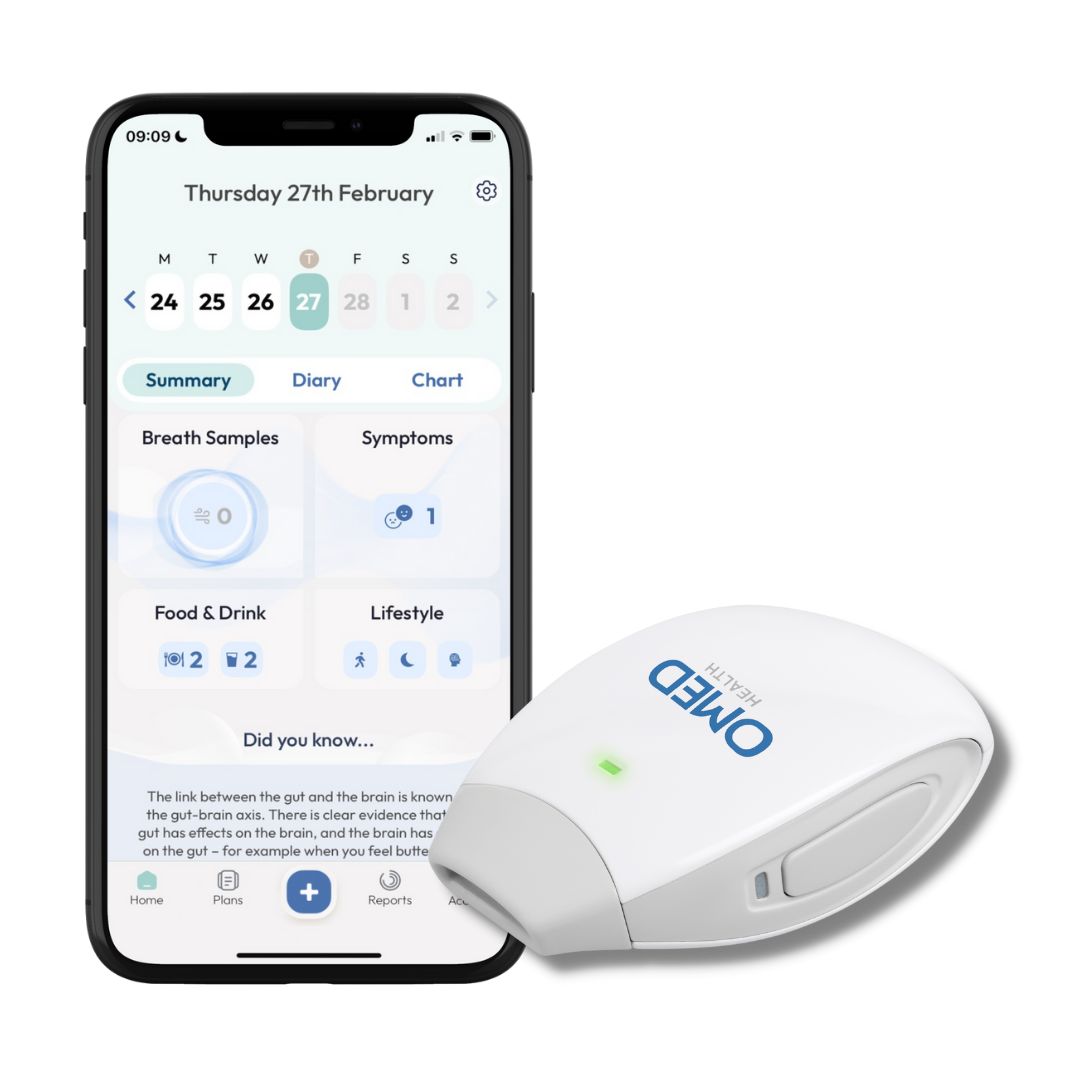
Luckily, SIBO can be easily diagnosed with a simple at-home SIBO breath test. This test measures the hydrogen and methane levels in your breath, and you’ll receive a doctor-led diagnosis in the app. If you test positive for SIBO, your healthcare provider can recommend a personalized treatment plan based on your diagnosis. Ask your healthcare provider about a SIBO Test.
References
- National Institute of Diabetes and Digestive and Kidney Diseases (NIH) Article: Treatment for Food Poisoning [Internet]. 2019 [cited 2025 Aug 28]. Available from: https://www.niddk.nih.gov/health-information/digestive-diseases/food-poisoning/treatment
- Gomes de Oliveira L, Ribeiro de Araujo A, Colombo Pimentel T, Capozzi V, Bezerra TKA, Magnani M, Probiotics and Prebiotics in Foodborne Illness: Mechanisms, Applications, and Future Directions, Journal of Food Protection, Vol 88, Issue 9, 2025, doi: org/10.1016/j.jfp.2025.100584
- Lacy BE, Wise JL, Cangemi DJ. Leaky Gut Syndrome: Myths and Management. Gastroenterol Hepatol (N Y). 2024 Aug;20(5):264-272. PMCID: PMC11345991