


The gut-liver axis is a bidirectional relationship between the gastrointestinal tract and the liver, facilitating regulation of metabolic, immune and microbial processes. The main linking pathway is the portal vein. Since the liver is a ‘first pass’ organ, it is the first to receive everything absorbed from the intestines, not only including dietary nutrients like sugars, amino acids, and fats, but also microbial metabolites, any endotoxins, bile acids, and chemical substances such as alcohol or medications. Could this connection cause a dysfunctional gut to contribute to liver disease progression? In this blog we discuss the latest research and explore potential biological processes behind the growing evidence connecting gut conditions such as SIBO and liver disease.
Liver disease and systemic health: a growing burden
A well-functioning liver plays an important role in our overall health, with over 500 pivotal functions including blood detoxification, bile production to support digestion, energy storage, protein synthesis, hormone regulation and immune functions. However, death rates from liver disease have doubled in the last twenty years in the UK (1). Globally, it has been estimated to affect one in four people worldwide and symptoms do not tend to show until the disease has reached irreversible stages, shown in the graphic below (2). This is why liver disease has been dubbed a ‘silent killer’.
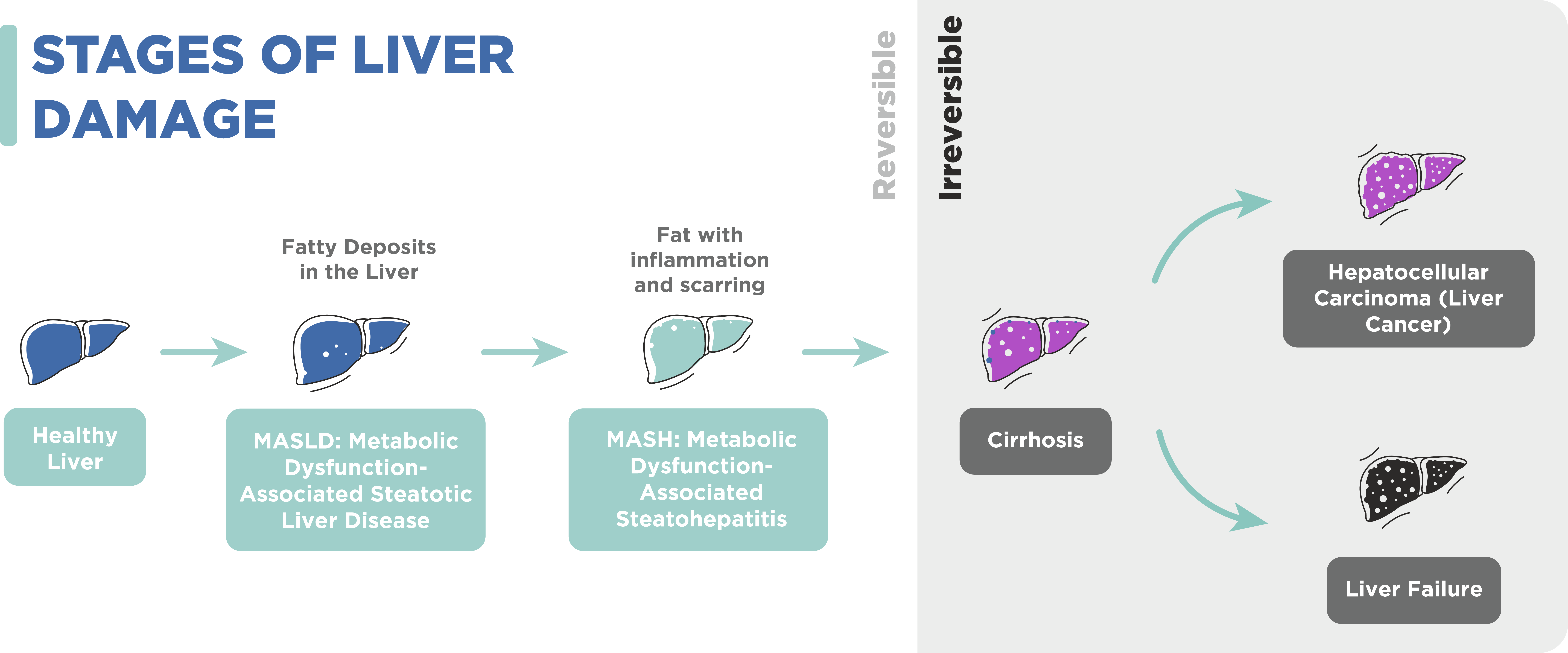
The main cause of liver disease is insulin resistance, a metabolic disorder that also causes type 2 diabetes (3). Note that insulin resistance tends to be caused by a mixture of factors including obesity, physical inactivity, a diet high in saturated fat, sodium and sugar as well as certain medications and genetic factors.
Both insulin resistance and obesity are risk factors for gut conditions SIBO and intestinal methanogen overgrowth (IMO), previously known as methane-dominant SIBO. These conditions are characterised by symptoms such as bloating, pain, nausea, constipation and diarrhea. SIBO can be diagnosed via breath hydrogen levels rising over a certain threshold shortly after the ingestion of a lactulose or glucose substrate. This indicates that bacteria have proliferated in the small intestine. IMO, on the other hand, is caused by methane producing microorganisms called archaea. They are usually found in smaller numbers and may be present throughout the entire gastrointestinal tract.
While we know that the gut and the liver are interconnected through numerous communication networks involving immune regulation, metabolism and gut microbiome activity, a causal relationship between SIBO or IMO and liver disease has not been fully established.
Evidence linking the prevalence of SIBO and liver disease
A 2018 meta-analysis found that SIBO prevalence in cirrhosis patients was 40.8% whilst only 10.8% in healthy participants (4). Interestingly, SIBO was more likely in later stages of cirrhosis. This finding was mirrored by another study looking at an earlier stage of liver disease called MALSD (metabolic dysfunction associated steatotic liver disease), which is characterised by steatosis or fat accumulation in the liver. The authors concluded that not only was there was a clear association between SIBO and MASLD, but the probability of having SIBO increased with lesion severity within MASLD patients (5). A 2020 review of more than a thousand people over 10 studies further established this finding by concluding that SIBO was four times more likely in people with MASLD compared to controls (6).
When looking at patients with later stage liver disease, SIBO was associated with a worse prognosis (or death). The authors examined whether the presence of SIBO affects the likelihood of death in cirrhosis patients, find that out of 50 patients with cirrhosis, 16 patients died within four years (7). Of those who died, 12 had SIBO and only 4 tested negative. While the sample size was relatively small, these numbers to indicate that SIBO presence is linked to earlier death in late-stage liver disease.
The most recent meta-analysis to date found that the odds of developing SIBO among patients with chronic liver disease was 6.7 times higher compared to controls (8). They also found that patients with spontaneous bacterial peritonitis, an infection of the abdomen, had the highest SIBO prevalence (57.7%), followed by those with hepatic encephalopathy (i.e. liver failure induced brain dysfunction) (41.0%) and variceal bleed which occurs when blood vessels burst or leak (39.5%). Additionally, patients with portal hypertension were significantly more likely to have SIBO compared to those without. Overall, it is clear that SIBO is associated with liver disease, but what about other gut dysbiosis such as methanogen overgrowth?

Mighty methanogens: implications for liver health
Methane gas is detected in approximately 30-60% of the adult population (9). When detected on breath at 10ppm or higher, a patient can be diagnosed as IMO positive. The condition is also associated with slow transit times and symptoms such as bloating and constipation.
Like SIBO, IMO is a sign of gut dysbiosis as there is a disproportionately large number of methanogens present compared to healthy individuals. Yet, a study screening for the presence of 3ppm of more of methane or 20ppm or more hydrogen in the breath following a lactulose breath test found that of just under 500 MASLD patients, 72% tested positive for methane only, 2.2% for hydrogen only and 11.5% tested positive for both gases (10). The group with only breath methane over the threshold, had both a higher BMI and hypertension prevalence compared to the mixed hydrogen-methane positive group. Their findings indicate that breath methane positivity is significantly associated with MASLD. The authors also claimed that elevated methane levels had the potential to serve as a simple, non-invasive biomarker for identifying liver disease.
Methanogens can have a significant impact on the gut microbiome due to their use of hydrogen to produce methane. This consumption reduces hydrogen availability in the gut which can alter fermentation thermodynamics. In particular, short chain fatty acid (SCFA) production and ratios can be affected. Since these molecules have wide ranging positive health effects, changes can further downstream implications for host health (11).
Here’s a breakdown of how it works:
Both hydrogen and SCFAs are by-products of bacterial fermentation. When hydrogen builds up in the gut, these reactions become less energetically favourable. Methanogens therefore act as a hydrogen sink, helping to maintain conditions that support SCFA production. However, some bacteria also rely on hydrogen to grow, producing SCFAs like acetate. Methanogens can then outcompete these microbes, contributing to dysbiosis. Other SCFAs like propionate are made through pathways less dependent on hydrogen, so may be less affected and could even increase in a methanogenic environment. Producers of the particularly beneficial SCFA butyrate are sensitive to environmental changes, and some studies report reduced production when methanogens are present. Learn more about the importance of SCFAs in the graphic (11–13).

The current scientific evidence demonstrates that dysbiosis of the delicate balance of the gut microbiome, whether towards SIBO or IMO, is likely to co-occur with liver disease, but the exact ways in which this can happen remains uncertain.
Mechanisms of the gut-liver axis: how dysbiosis could contribute to liver damage
We know that maintain good gut health can help maintain overall health, but why is poor gut function tied to liver disease?
Severe gut dysbiosis can weaken the intestinal barrier and lead to a phenomenon sometimes known as ‘leaky gut’. This allows larger and potentially harmful molecules to slip through into the bloodstream where they are transported straight to the liver. Endotoxins such as lipopolysaccharides (molecules found on gram-negative bacteria), as well as metabolites including trimethylamine-N-oxide (TMAO), secondary bile acids, and SCFAs in abnormal ratios, can all reach the liver through the portal vein (14). TMAO is particularly interesting as it has been associated with a range of diseases including cardiovascular diseases, hypertension and insulin resistance (15).
Once there, these compounds can trigger immune activation, oxidative stress, and inflammation, prompting the liver’s resident macrophages (Kupffer cells) to release cytokines and other inflammatory mediators. Over time, this inflammatory response can damage hepatocytes and promote fibrosis (scarring) which is a key step in the progression from fatty liver to cirrhosis (16).
Remember, the gut-liver axis goes both ways: as liver function deteriorates, bile flow and composition change, disrupting the gut microbial ecosystem further. Impaired bile secretion can alter microbial metabolism and increase intestinal permeability, worsening dysbiosis and further fuel liver injury, and so on.
Treatment for liver disease while it is still reversible often revolves around lifestyle changes, with particular focus on the Mediterranean diet, increased physical activity and weight loss. However, SIBO treatment tends to start with the removal of any obvious causal factors where possible, such as stopping the use of proton-pump inhibitors. A low FODMAP diet for symptom reduction alongside anti-microbials or antibiotics is often recommended sometimes followed by personalised dietary plans or supplements (17). Some studies looking at pre- and probiotic therapy for MASLD show promise in improving liver injury markers (18). However, research into treatment for co-occurring gut dysbiosis and liver disease remains sparse.
Connecting the dots with OMED Health
Understanding the gut–liver axis means looking at both sides of the story: what’s happening in the gut and how the liver responds. At OMED Health we offer two distinct, complimentary solutions for gut-liver axis research.
1. Real-time measurement of breath hydrogen and methane
Using the OMED Health Breath Analyzer , you can measure hydrogen and methane levels with lab-level accuracy, from the comfort of your own home. This enables both diagnosis and monitoring of SIBO and IMO, capturing dynamic changes in gut microbial activity over time. Ask your healthcare professional about the at-home SIBO Breath Test.
2. Comprehensive breath-based biomarker analysis for gut and liver health
Our Inside Insights platform measures a full panel of microbiome-related metabolites, including SCFAs, TMAO, sulphur compounds, and an indication of liver health using the volatile compound limonene. Limonene is naturally present in citrus foods and some packaged goods. Since the body clears limonene through the liver, elevated levels have been associated with poor liver health and may indicate that the liver is working harder than normal, providing a non-invasive window into hepatic stress and function.

By combining these tools, OMED Health allows you to delve into the research and help connect microbial activity in the gut with downstream liver responses, providing a better picture of the gut–liver axis.
Please email us to discover your bespoke liver research solution.
Reference List
- Liver disease in numbers – key facts and statistics [Internet]. British Liver Trust. [cited 2025 Nov 17]. Available from: https://britishlivertrust.org.uk/information-and-support/statistics/
- Younossi ZM, Koenig AB, Abdelatif D, Fazel Y, Henry L, Wymer M. Global epidemiology of nonalcoholic fatty liver disease—Meta‐analytic assessment of prevalence, incidence, and outcomes. Hepatology. 2016 July;64(1):73. https://doi.org/10.1002/hep.28431
- Freeman AM, Acevedo LA, Pennings N. Insulin Resistance. In: StatPearls [Internet]. Treasure Island (FL): StatPearls Publishing; 2025 [cited 2025 Nov 17]. Available from: http://www.ncbi.nlm.nih.gov/books/NBK507839/
- Maslennikov R, Pavlov C, Ivashkin V. Small intestinal bacterial overgrowth in cirrhosis: systematic review and meta-analysis. Hepatol Int. 2018 Nov 1;12(6):567–76. https://doi.org/10.1007/s12072-018-9898-2
- Wang Z, Tan W, Huang J, Li Q, Wang J, Su H, et al. Small intestinal bacterial overgrowth and metabolic dysfunction-associated steatotic liver disease. Front Nutr [Internet]. 2024 Dec 17 [cited 2025 Nov 17];11. Available from: https://www.frontiersin.org/journals/nutrition/articles/10.3389/fnut.2024.1502151/full
- Wijarnpreecha K, Lou S, Watthanasuntorn K, Kroner PT, Cheungpasitporn W, Lukens FJ, et al. Small intestinal bacterial overgrowth and nonalcoholic fatty liver disease: a systematic review and meta-analysis. Eur J Gastroenterol Hepatol. 2020 May;32(5):601–8. https://doi.org/10.1097/MEG.0000000000001541
- Efremova I, Maslennikov R, Alieva A, Poluektova E, Ivashkin V. Small Intestinal Bacterial Overgrowth Is Associated with Poor Prognosis in Cirrhosis. Microorganisms. 2023 Apr;11(4):1017. https://doi.org/10.3390/microorganisms11041017
- Shah A, Spannenburg L, Thite P, Morrison M, Fairlie T, Koloski N, et al. Small intestinal bacterial overgrowth in chronic liver disease: an updated systematic review and meta-analysis of case-control studies. eClinicalMedicine [Internet]. 2025 Feb 1 [cited 2025 Nov 17];80. Available from: https://www.thelancet.com/journals/eclinm/article/PIIS2589-5370(24)00603-5/fulltext
- Triantafyllou K, Chang C, Pimentel M. Methanogens, Methane and Gastrointestinal Motility. J Neurogastroenterol Motil. 2014 Jan 31;20(1):31–40. https://doi.org/10.5056/jnm.2014.20.1.31
- An S, Cho E young, Hwang J, Yang H, Hwang J, Shin K, et al. Methane gas in breath test is associated with non-alcoholic fatty liver disease. J Breath Res. 2024 July;18(4):046005. https://doi.org/10.1088/1752-7163/ad5faf
- Ríos-Covián D, Ruas-Madiedo P, Margolles A, Gueimonde M, de los Reyes-Gavilán CG, Salazar N. Intestinal Short Chain Fatty Acids and their Link with Diet and Human Health. Front Microbiol [Internet]. 2016 Feb 17 [cited 2025 Nov 17];7. Available from: https://www.frontiersin.org/journals/microbiology/articles/10.3389/fmicb.2016.00185/full
- Hylemon PB, Harris SC, Ridlon JM. Metabolism of hydrogen gases and bile acids in the gut microbiome. FEBS Letters. 2018;592(12):2070–82. https://doi.org/10.1002/1873-3468.13064
- Pozuelo M, Panda S, Santiago A, Mendez S, Accarino A, Santos J, et al. Reduction of butyrate- and methane-producing microorganisms in patients with Irritable Bowel Syndrome. Sci Rep. 2015 Aug 4;5(1):12693. https://doi.org/10.1038/srep12693
- Alexiou O, Despotis G, Kalambokis G, Tsiakas I, Christaki M, Tsiouris S, et al. Impact of small intestinal bacterial overgrowth on systemic inflammation, circulatory and renal function, and liver fibrosis in patients with cirrhosis and ascites. Ann Gastroenterol. 2024;37(3):348–55. https://doi.org/10.20524/aog.2024.0881
- Jaworska K, Kuś M, Ufnal M. TMAO and diabetes: from the gut feeling to the heart of the problem. Nutr Diabetes. 2025 May 20;15(1):21. https://doi.org/10.1038/s41387-025-00377-8
- Somnay K, Wadgaonkar P, Sridhar N, Roshni P, Rao N, Wadgaonkar R. Liver Fibrosis Leading to Cirrhosis: Basic Mechanisms and Clinical Perspectives. Biomedicines. 2024 Sept 30;12(10):2229. https://doi.org/10.3390/biomedicines12102229
- Velasco-Aburto S, Llama-Palacios A, Sánchez MC, Ciudad MJ, Collado L. Nutritional Approach to Small Intestinal Bacterial Overgrowth: A Narrative Review. Nutrients. 2025 Apr 23;17(9):1410. https://doi.org/10.3390/nu17091410
- Pan Y, Yang Y, Wu J, Zhou H, Yang C. Efficacy of probiotics, prebiotics, and synbiotics on liver enzymes, lipid profiles, and inflammation in patients with non-alcoholic fatty liver disease: a systematic review and meta-analysis of randomized controlled trials. BMC Gastroenterology. 2024 Aug 22;24(1):283. https://doi.org/10.1186/s12876-024-03356-y
Commonly asked questions
Can methane levels be used to infer mild liver disease?
While increased methane in the breath has been associated with MASLD (10), further research is needed to infer a diagnosis.
Why are death rates from liver disease increasing compared to other diseases?
This is largely due to the difficulty in diagnosing liver disease in time. Since symptoms only occur in later stages, treatment cannot always save lives.
Is the breath analyzer adapted for clinical trials ?
Yes. If you purchase a device for research purposes you will receive a bespoke login code that allows access to the research-use mobile application. This hides data from users and provides reports linked to each device ID number.
Does the breath analyzer have to be used in-clinic?
No, participants can use their device anywhere, including in the home setting.
What is involved in the Inside Insights test?
Inside Insights involves the lease of a Breath Biopsy® Collection Station which enables in-depth collection and comes with expert analysis. This includes microbial metabolites such as acetate, butyrate and propionate.
Our FAQ section might not have the answer you’re looking for right now but our team certainly will. If you need answers, contact us